The First-Season Kit Our Lighting Crew Packs
Every October our holiday lighting crew pulls inventory out of storage, counts what survived, and reorders. A first season starts the same way, minus the storage: commercial C9 light line bought by the foot, LED bulbs by the case, clips that fit shingles and gutters, a ladder with a stabilizer bar, photocell timers, and gloves that still grip in November cold. Budget $1,500 to $3,000 for the whole list at commercial grade, sized for your first 8 to 12 jobs. The one purchase that can sink a season is retail box-store product, so most of this page explains what professionals buy instead and the spec that matters at each step.
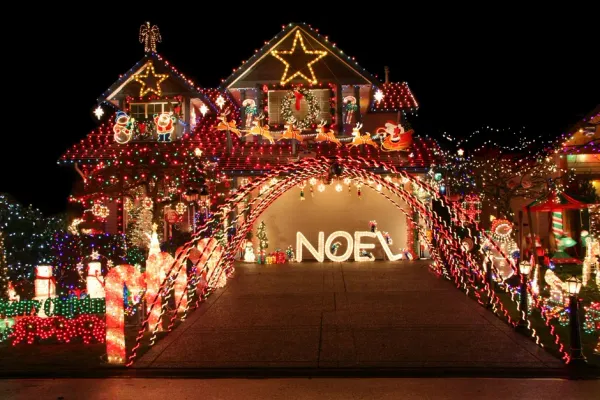
Light line by the foot, bulbs by the case
Professional light line is not a boxed string. It is three components bought separately, which is what lets you cut every run to the exact roofline and rebuild any failure in seconds:
| Component | How it is sold | The spec to hold |
|---|---|---|
| C9 socket wire | Bulk spools, cut to length | SPT-2 rated wire, sockets spaced 12 inches for the classic roofline look |
| LED retrofit bulbs | By the case | Faceted C9 lenses read brighter from the street; warm white covers most of our orders |
| Slide-on plugs | Bags of male and female ends | Must match the wire's SPT rating, so SPT-2 plugs on SPT-2 wire |
Jobs get quoted per linear foot, so buying line in bulk feet keeps measuring, quoting, and ordering in the same unit. Retail strings lose this comparison on every row. They look dim from the curb, the wiring is molded shut so one dead section means a whole replacement, and our guide's mistake list starts with operators who bought them to save money and spent December on service calls. Commercial line survives weather, daisy-chains cleanly, and comes back out of storage working.
Order roughly 10 percent spare bulbs with the initial buy. Re-bulbing during an in-season visit is a two-minute fix only if the spares exist.
C9 socket wire spools · Faceted C9 LED bulbs · SPT-2 slide-on plugs
Attachment without a single staple
All-in-one clips answer nearly every roofline. One clip design grips both shingle edges and gutter lips, holds a C9 socket at a consistent angle, and comes off in seconds in January. That last part matters more than it sounds, because takedown is built into the price of a professional install, and clip removal speed decides how long takedown day runs.
Two rules from our install sprints. First, one clip per socket, no skipping. Sagging line between clips is what separates a professional roofline from a homeowner's at fifty feet, and clips are the cheapest thing on the truck, so buy them by the case with spares. Second, never staples, never nails, never screws through the line. Staples pierce insulation and create shorts, they chew up fascia the customer will find in spring, and they turn January takedown into surgery.
Bulb angle is the finishing detail. Set every clip so the bulbs point the same direction along the whole run, straight up or straight out, and the house reads professional from across the street.
Ladder discipline, bought in advance
Ladder falls are this industry's defining injury, and November is their season. The safety rules in our startup guide come from running rooflines for a living, and the purchases below are those rules made physical:
- A 28-foot extension ladder reaches two-story rooflines with the overlap safe setup requires. Check the duty rating. Type IA carries 300 pounds, which is you plus winter layers plus a belt bag of product.
- A stabilizer bar, not optional. It spans the gutter, protects it from point-loading, and stops the sideways walk that causes roofline falls. Our crews do not set an unstabilized ladder against a gutter, ever.
- Cold-weather grip gloves. Clip work is fiddly, and numb fingers drop things from twenty feet. A glove that still grips when wet changes the length of an install day.
- A belt bag for line and clips. Three points of contact means hands climb while gear rides on your hip.
The rules that cost nothing still apply: two people per job, nobody overreaches, and wet, icy, or windy roofs get rescheduled.
28-foot extension ladders · Ladder stabilizers · Cold-weather grip gloves
Timers, cords, and the arithmetic of one circuit
A dark display at 7 pm generates an angry call, every time, and photocell timers ended that category of complaint for our crew. The photocell switches the display on at dusk with no customer involvement, and the timer half shuts it down at a set hour. Buy outdoor-rated units with grounded outlets and set them once at install.
Cords are the quiet spec. Green outdoor-rated cords disappear into landscaping, and gauge matters more than length: 16-gauge handles typical LED rooflines, while long runs feeding multiple zones deserve 14-gauge.
Then the arithmetic. A C9 LED retrofit draws about one watt against seven or more for the old incandescent glass, which is why LED line runs long chains without drama. The danger is not one roofline but the stack: your runs, plus the customer's inflatables, plus their existing decor, all sharing one exterior outlet. Total the watts before plugging in, respect the line manufacturer's maximum run length, and keep everything on GFCI-protected exterior outlets. Five minutes of counting at install beats a tripped-breaker call in mid-December.
The season this list is sized for
This kit matches the startup budget in our full guide, which carries the other half of the launch: per-foot pricing, the September selling calendar, and the complete ladder rules. Two timing notes from our own seasons. Order product by early October, because commercial suppliers sell out during the exact weeks demand arrives. And budget for a seasonal liability policy alongside the gear, since it belongs inside the $1,500 to $3,000 and commercial customers will ask for the certificate.
Nothing on this page burns off as a consumable. Packed into labeled bins in January, the line, clips, and hardware walk back out next October, which is what makes season two cheaper than season one.
The links above go to live Amazon searches for each product class instead of single listings, so check what you find against the specs in each block. As an Amazon Associate, Great Hustles earns a commission on qualifying purchases made through them. That never changes what you pay, and our affiliate disclosure spells out the whole arrangement.
Gear Is Half the Call
Inventory is the smaller decision. The idea page weighs the sprint itself: what installs pay, how renewals compound, and who the compressed calendar actually suits.