Pressure Washing Equipment for a Business That Pays
Walk into the pressure washer aisle and every box shouts PSI numbers at you. Meanwhile, the spec that decides how fast you clean a driveway, and therefore how much you earn per hour, is printed in small type: gallons per minute. Our exterior cleaning crew washes metro Atlanta driveways and houses every week, and this guide is the equipment list we would rebuy at each stage of the business: the sub-$1,000 prove-it setup, the $2,500 weekend rig that most operators should aim for, and the components that matter more than the machine itself. No 40-item padding, and no picks we have not run or watched fail.
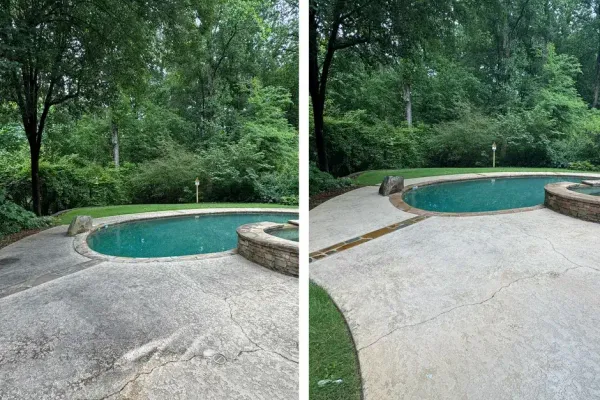
The one spec that matters: GPM beats PSI
Cleaning speed is water volume moving debris off a surface. PSI cracks the grime loose; GPM carries it away. Past roughly 3,000 PSI, residential concrete does not clean meaningfully faster with more pressure, but every added gallon per minute rinses more square feet per pass.
The practical tiers:
| Machine class | Specs | What it means for jobs |
|---|---|---|
| Consumer gas | 2.3 to 2.7 GPM, ~3,000 PSI | Proves the business. A 2-car driveway takes 2+ hours |
| Semi-pro | 3.5 to 4 GPM, 3,500 to 4,000 PSI | The sweet spot. Same driveway in about an hour |
| Professional | 5.5+ GPM, 3,500+ PSI, belt drive | Crew territory. Driveways in 30 to 40 minutes |
Engine and pump notes from our own fleet experience: Honda GX-series engines are the reliability benchmark the industry standardizes on, triplex pumps outlast the cheaper axial pumps by years, and belt-drive machines run cooler through the long days a full schedule brings. Buy the best pump and engine combination your tier allows and ignore the PSI marketing.
Browse current listings by class: 4 GPM machines with Honda engines · 5.5 GPM belt-drive machines
The surface cleaner: the attachment that pays for itself first
A surface cleaner is a spinning bar of nozzles inside a hooded deck, and it is the difference between wand-striped driveways that take three hours and even, professional finishes in one. If the machine is the engine of this business, the surface cleaner is the transmission.
Sizing rule: match the cleaner to your GPM, not your ambitions. Underpowering a big cleaner produces a slow, streaky clean that looks worse than the wand.
| Your machine | Cleaner size | Notes |
|---|---|---|
| 2.3 to 2.7 GPM | 14 to 15 inch | Entry cleaners with fixed casters do fine here |
| 3.5 to 4 GPM | 15 to 20 inch | The workhorse class; get one with wheels and a stainless deck |
| 5.5+ GPM | 20 to 28 inch | Crew-grade stainless units with swivel casters |
15-inch surface cleaners · 20-inch stainless surface cleaners
Soft washing gear: how houses actually get cleaned
Houses are not driveways. Siding, stucco, and roofs get cleaned with low pressure and a cleaning solution doing the work, a method the industry calls soft washing. Blasting a house at driveway pressure strips paint, shreds screens, and drives water behind the siding, which is how new operators end up buying someone a window.
The starter soft wash stack:
- Downstream injector. Pulls your house wash mix into the line after the pump, protecting the pump internals. The single cheapest component that turns a driveway rig into a house washing rig.
- Soft wash nozzle set. Wide-angle, low-pressure tips that turn a 4 GPM machine into a rinsing tool instead of a paint stripper.
- House wash mix. The industry standard is sodium hypochlorite diluted with water plus a surfactant that helps it cling. Learn dilution ratios properly before the first house; the difference between cleaning and killing shrubs is measured in percentages. Rinse plants before and after, every time.
- A 12v pump sprayer or pump-up foamer for applying mix to gutters and spot areas.
Downstream injectors · Soft wash nozzle kits · House wash surfactants
Hoses, reels, and the boring gear that decides your day
Nobody gets excited about hose, and then hose determines whether setup takes eight minutes or twenty-five at every single job:
- Pressure hose: 100 feet minimum, 200 for houses. Gray non-marking covers save you from black scuff lines across a customer's patio. Kink-resistant single-wire braid at minimum.
- Garden hose: 100 feet of 5/8 inch. You are running off the customer's spigot; thin 1/2 inch hose starves a 4 GPM machine.
- Quick-connect fittings on everything. Brass or stainless. The minutes saved per connection add up to a job per day at scale.
- A hose reel the moment your back notices the coiling. Trailer or truck-mounted operators consider these non-negotiable.
- PPE that actually gets worn: safety glasses (the bounce-back off concrete carries grit), hearing protection around gas engines, nitrile gloves for mix handling, and boots with real tread for wet driveways on a slope.
Non-marking pressure hose · Quick-connect fitting kits · Hose reels
Three budgets, three complete rigs
Pulling it together, the way we would spend each budget today:
Under $1,000, prove the business: consumer gas machine around 2.5 GPM, 15-inch entry surface cleaner, downstream injector, 50 feet of pressure hose, basic nozzle set, glasses and gloves. It will feel slow by month two. That is the point: it forces you to book the jobs that justify the upgrade.
$1,800 to $3,000, the weekend business: 4 GPM semi-pro machine (this is the tier where engine and pump quality jump), 15 to 20 inch surface cleaner with wheels, 100 feet of non-marking hose, full nozzle and injector setup, proper PPE. This rig handles driveways, houses, decks, and patios at professional speed, and it is where most operators should live for their first year or two.
$6,000 and up, the crew rig: 5.5+ GPM belt-drive machine, water tank and trailer or skid, dual reels, 24-inch stainless cleaner, full soft wash system. Buy this tier when the calendar demands it, not when the ego does. The jobs fund it; the guide to getting those jobs is the startup guide.
A note on what is missing from this page: specific product cards. Amazon's pressure washer listings churn constantly and we will not pin our name to a model we have not verified is the current version. The search links above land on live results filtered to the specs that matter; use the spec tables on this page to judge what you find.
How to use this page
Read the startup guide first if you have not: it covers the pricing and first customers that make any of this gear worth owning. Then buy your tier, in this order of priority: machine, surface cleaner, injector, hose, PPE. Every link above goes to a live Amazon search scoped to the right spec class rather than to a specific model, because machine listings change faster than any review site keeps up with. Judge what you find against the spec tables here.
As an Amazon Associate, Great Hustles earns from qualifying purchases made through links on this page, at no extra cost to you. Details in our affiliate disclosure. No manufacturer paid for placement here, and none can.
Turn the Rig Into a Business
The equipment is a third of the business. The startup guide covers the pricing that keeps you profitable, the first-customer playbook, and the mistakes that cost us real money.