The Window Cleaning Kit Our Crew Would Rebuy
A hardware-store squeegee and a professional one look identical from six feet away. The difference shows up on the glass, in the streak a customer finds an hour after you leave. Our window cleaning crew earns $175 minimum visits with maybe fifteen pounds of hand tools, and this page is that load-out by gear class: the channels and rubber that decide the finish, the scrub and reach tools around them, and the belt rig that keeps both hands free on a ladder. Everything fits the $300 to $800 startup range from our window cleaning breakdown. The pure-water systems that start around $1,500 can wait until a full route demands one.
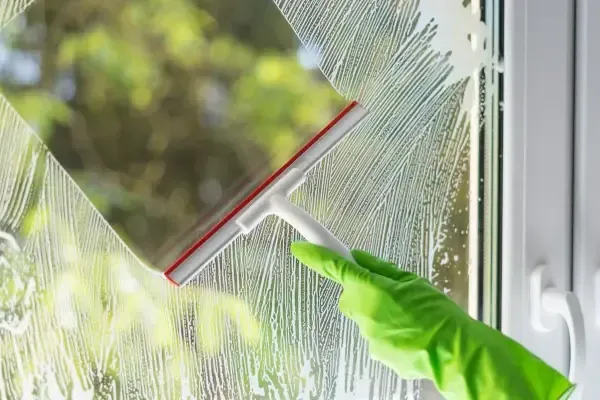
Channels and rubber decide the finish
A professional squeegee is three parts that separate: handle, channel, rubber. Homeowner squeegees mold them into one piece, which is exactly why they streak and why you cannot fix them when they do. Spend here first.
| Part | What to buy | Why it matters |
|---|---|---|
| Handle | Brass or stainless, from a pro glass brand | Plastic and zinc handles flex under wrist pressure and lose their grip on the channel mid-stroke |
| Channels | 10, 14, and 18 inch to start | French panes, casements, and picture windows each want a different width; channels swap into one handle in seconds |
| Rubber | Soft compound for cool months, hard for summer heat | Rubber hardness against glass temperature decides drag, chatter, and the clean release at the edge |
| Spare rubber | A dozen replacements on hand | We flip or swap rubber after roughly every eighth house; one nicked edge prints the same line on every pane you pull |
Buy the handle once, then spend the rest of your career buying rubber. That is the economics of this tool.
Professional squeegee handles and channels · Replacement squeegee rubber
The wet side: T-bars, sleeves, soap, and the scraper
Everything in this class puts solution on the glass or lifts debris the solution cannot float:
- T-bar and sleeve. The T-bar carries a washing sleeve; the sleeve does the scrubbing. Match sleeve width to your most-used channel (a 14 inch pairing covers most residential glass), and get one plain sleeve plus one with a scrubbing stripe for exterior grit.
- Soap. A professional glass soap concentrate glides the rubber and rinses without haze. Plenty of working cleaners run a small squirt of dish soap instead, and the honest difference is feel and film, not customer-visible results on day one.
- A 6 inch scraper with retractable blade. For paint flecks, sticker glue, and construction debris. One warning we give every new hire: tempered panes can carry fabricating debris that a dragged blade turns into scratches. Keep the pane soaking wet, use a fresh blade, work a test corner first, and leave the scraper holstered on glass marked tempered.
- Bronze wool. Light hard-water haze responds to bronze wool on wet glass with a light hand. Mineral removal is a $25-per-window line on our card, so this small pad earns real money.
T-bars and washing sleeves · Glass scrapers with blades · Glass cleaning concentrates
Reach and carry: poles, the belt bucket, and scrim
Second-floor glass and full hands are the two problems this class solves.
An extension pole in the 8 to 16 foot range handles most high exterior panes from the ground. The spec that matters is the lock: external flip clamps hold when wet, while cheap internal twist locks slip exactly when a loaded T-bar is over your head. The tip needs to take both your T-bar and your squeegee handle, so check the fitting type before buying either.
The bucket-on-a-belt is the piece nobody believes in until the first ladder job. It is a hip-hung holster bucket that carries the T-bar and squeegee, which means both hands stay on the rungs while you climb. Add a hand towel through the belt and a holster for the scraper and you work an entire house without walking back to the main bucket.
Scrim is the finish. This open-weave linen cloth detail-wipes edges and sills without lint, and it is what separates a wiped window from a detailed one. Huck towels do the same work; microfiber handles frames and tracks. Paper towels put lint back on the pane, so they stay in the truck.
Extension poles with flip locks · Bucket-on-a-belt holsters · Scrim and huck towels
Ladder basics now, pure water when the route says so
The $300 to $800 range assumes what our facts bear out: most garages already hold a usable ladder. For window work you want a short step ladder for interiors and entry glass, and an extension ladder rated Type IA (300 pounds) for second-story exteriors, set so it never rests against the glass or the frame. The full ladder discipline, angles, stabilizer spec, and all, lives on our gutter cleaning kit page, and every word of it applies to window work at height.
The named upgrade path is pure water. A water-fed pole feeds filtered water to a brush head, the glass rinses spot-free with no squeegee stroke, and high panes get cleaned with both boots on the lawn. Systems start around $1,500 and climb from there, which is why we call it a route tool, not a starter tool. When your calendar fills with two-story exteriors, the speed pays for the filters. Before that, the squeegee kit above earns the same money and teaches the craft the brush never will.
Turning the list into a first kit
Buy in the order the blocks run: handle, channels, rubber, and the wet-side tools come first, and that much cleans every ground-floor pane in your neighborhood. Pole, belt bucket, scrim, and spare rubber round out the full $300 to $800 kit. Price the work before any of it: the window cleaning breakdown holds our pane rates and the spring-and-fall rebooking math that makes the gear worth owning. Note that every product link here is an Amazon search scoped to a spec class rather than a pinned model, since listings rotate faster than reviews stay accurate. Hold whatever you find against the spec notes above.
As an Amazon Associate, Great Hustles earns from qualifying purchases made through these links, and the price you pay does not move. The full policy sits in our affiliate disclosure. No brand paid to appear on this page, and none could.
Price the Work Before the Gear
A kit is not a business. The breakdown page carries our pane-by-pane rate card, the twice-a-year rebooking math, and an honest read on who this trade suits.